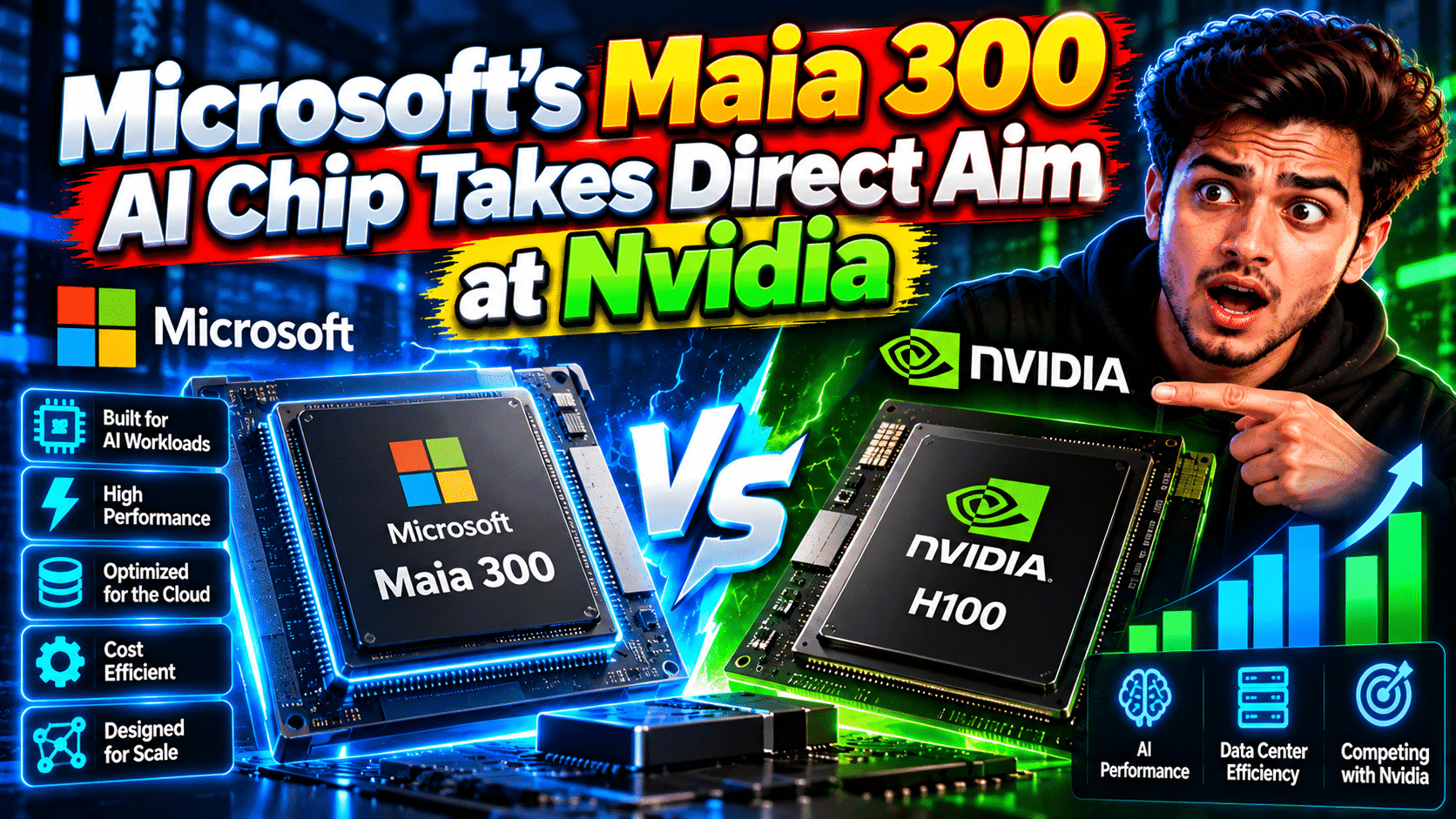
Microsoft’s Maia 300 AI Chip Takes Direct Aim at Nvidia
Microsoft isn’t waiting around for Nvidia anymore.
At the OCP Global Summit this week, the company pulled back the curtain on the Maia 300 — its third-generation AI chip, and the one Microsoft says will carry its inference workloads starting in 2027.
The headline number? Microsoft claims 40% more tokens per megawatt than leading GPU-based systems. That’s a bold claim. If it holds up in real deployments, it changes the economics of running AI at scale.
What We Know So Far
The Maia 300 is designed specifically for inference — the part of AI where trained models actually answer your questions and generate responses. It’s not a training chip. Microsoft is being strategic here: inference is where the ongoing costs pile up, and it’s where efficiency matters most.
The chip will roll out alongside what Microsoft describes as “multigigawatt deployments” next year. That’s data-center-speak for “we’re going all in.”
Why This Matters
Nvidia has owned the AI chip market for years. Every major AI lab, every cloud provider, every startup with serious ambitions — they’ve all been buying Nvidia GPUs. That dependence makes companies nervous. Nobody likes having a single supplier for something this critical.
Microsoft’s play is vertical integration. They design the chip, they run the data centers, they serve the models. Fewer middlemen, better margins, more control.
Google’s been doing this for years with its TPUs. Amazon has Trainium and Inferentia. Now Microsoft is making its most serious push yet to join that club.
The Bigger Picture
This isn’t just about one chip. It’s about where AI computing is headed.
The industry is splitting into two camps: those who buy Nvidia, and those who build their own silicon. The builders — Google, Amazon, Microsoft, Meta — are betting that custom chips designed for their specific workloads will win on cost and efficiency.
Nvidia’s not standing still, obviously. But the Maia 300 shows that the “just buy Nvidia” era is ending. The future is more fragmented, more competitive, and probably cheaper for everyone downstream.
For now, we’ll have to take Microsoft’s 40% efficiency claim at face value. Independent benchmarks will tell the real story when the chip ships in volume. But the direction is clear: the AI chip wars are just getting started.