
Tesla Is Ending Cybertruck Production in 2027 to Focus on Robotaxis and AI
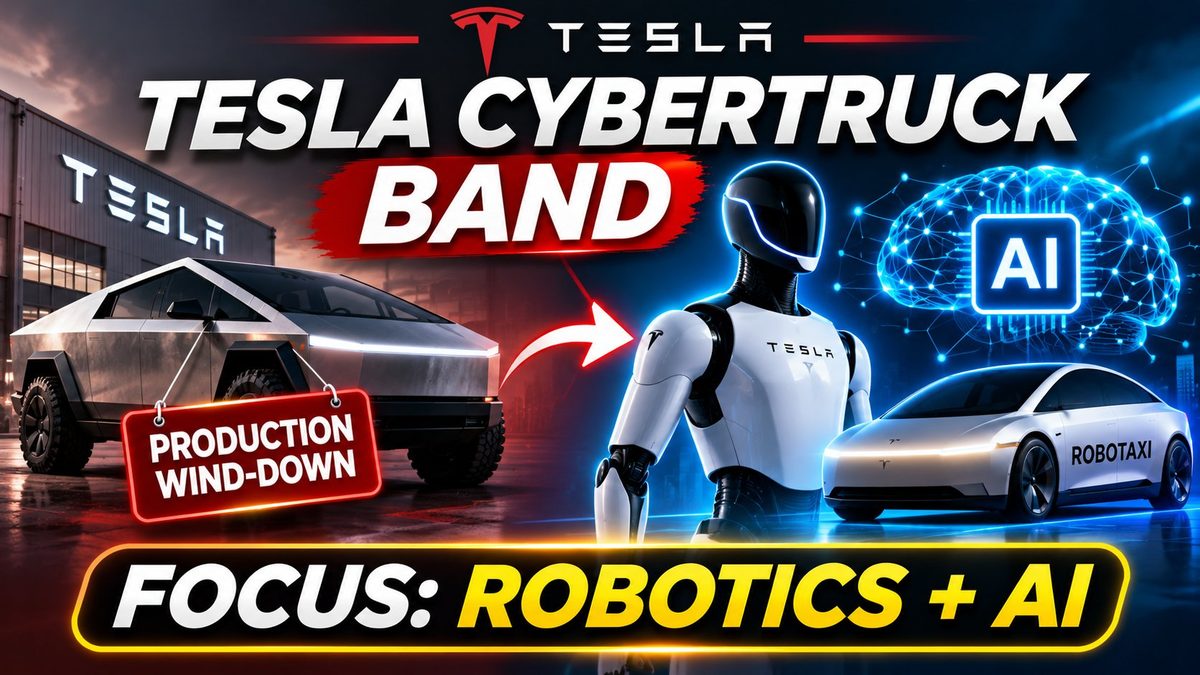
The Cybertruck is done. Tesla will wind down production of its angular stainless-steel pickup around mid-2027, CEO Elon Musk said on November 6, 2026 — ending the truck after just three and a half years on sale. The factory space at Gigafactory Texas will go to the Cybercab, Tesla’s self-driving taxi, as Musk turns the company’s focus to robotics and AI.
It was supposed to be the future of trucks. Here’s how it ended up a short chapter instead.
A Truck That Missed Its Own Target
Musk once said the Cybertruck would sell 250,000 units a year. The reality was about a tenth of that. Industry figures show sales dropped to just over 20,000 in 2025 — roughly half the number sold in 2024. After three years on the market, only around 73,000 Cybertrucks have been sold in total.
Quality didn’t help. Tesla has issued 11 recalls for the Cybertruck since it went on sale in late 2023, according to the National Highway Traffic Safety Administration. The truck’s troubled run started on day one: at the November 2019 unveiling, a steel ball cracked the supposedly bulletproof window glass on stage, in front of a live audience.
Four Years Late, Then Three Years on Sale
The Cybertruck took four years to go from unveiling to customers’ driveways. Musk said in November 2019 that production would start in late 2021, but supply chain problems pushed it again and again. The first truck came off the line at Gigafactory Texas in July 2023, though Tesla later said that was pilot production, with real deliveries starting late that year.
By the time it arrived, the market had moved on. In February 2026, Tesla launched a dual-motor all-wheel-drive trim at $59,990 — the lowest price the truck had ever sold for — in a bid to lift sales. It didn’t work. Just a day before Musk announced the wind-down, Tesla raised prices again, listing that trim at $82,490, the Premium trim at $92,490, and the Cyberbeast at $102,490.
What Comes Next: Cybercab and Robots
The factory space freed up by the Cybertruck will go to increased production of the Cybercab, the self-driving taxi with no steering wheel that Tesla is betting its future on. Musk has called the Cybertruck the “best vehicle Tesla has ever made,” and described the decision as the “end of an era” — but the message is plain: Tesla’s future is autonomous vehicles and humanoid robots, not pickups.
That shift matches where Musk’s attention has been for a while. The company’s robotics work and its AI ambitions now sit at the center of its story, while the car business — even its most famous truck — takes a back seat.
What Happens to Owners?
Tesla hasn’t said what support looks like for existing Cybertruck owners after production ends. Parts and service should continue — Tesla still services discontinued models — but resale values will likely take a hit, and the truck could become either a collector’s item or a cautionary tale. Some owners are already asking whether a three-year production run makes their truck rare, or just unwanted.
The bigger question is whether Tesla can make the Cybercab work where the Cybertruck didn’t. The robotaxi has to clear safety regulators, win public trust, and scale production — none of which is guaranteed. Tesla is trading a truck that sold 20,000 units a year for a bet on a market that barely exists yet.
It’s a week of big AI bets across the industry — read our report on OpenAI’s GPT-6 Cyber to see how the other side of the AI race is spending its money.
The Bottom Line
Tesla is ending Cybertruck production around mid-2027 after weak sales, 11 recalls, and a missed 250,000-a-year target. The Texas factory will build Cybercabs instead, as Musk bets the company on robotaxis and robotics. The truck that was meant to change pickups will be remembered as a three-year experiment — and a warning about what happens when hype meets the sales chart.
Sources: Reuters — Tesla Cybertruck’s bumpy run · Tesla — Cybertruck
For more on the week’s tech shifts, see our OpenAI data centre report — another giant rethinking where its money goes.