
GS Group Breaks Ground on a 1.2 GW AI Data Center in Donghae in South Korea’s Biggest AI Build Yet
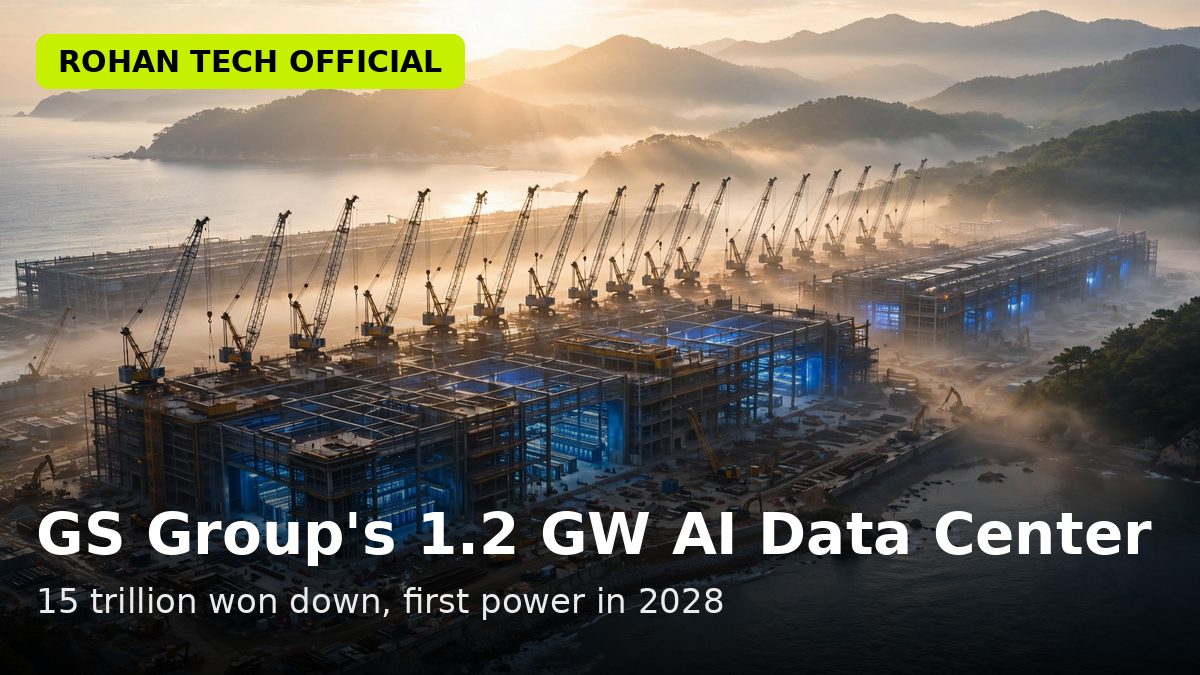
South Korea’s race to build the computing backbone for artificial intelligence has moved from plans on paper to steel in the ground. On November 28, 2026, GS Group held a groundbreaking ceremony for a 1.2 GW AI data center in Donghae, Gangwon Province, the first gigawatt-scale project in the government’s flagship AI infrastructure program to reach construction. President Lee Jae-myung attended, a sign of how much weight Seoul now puts on data centers as national infrastructure.
The ceremony took place at the Bukpyeong No. 2 General Industrial Complex, where about 270 people gathered. Alongside the president were GS Group Chairman Huh Tae-soo, Deputy Prime Minister and Science and ICT Minister Bae Kyung-hoon, Gangwon Governor Woo Sang-ho, Donghae Mayor Lee Jung-hak and GS AI Infra CEO Do Hyun-soo.
A First Shovel in the Ground for Korea’s AI Ambitions
The Donghae project is the first gigawatt-scale AI data center in the government’s “Three Mega-Projects for Korea’s Great Leap” to break ground. The plan was announced on June 29, 2026, and the first shovel has gone into the ground about five months later. That is a fast pace for a project of this size.
A gigawatt is a useful yardstick for the scale involved. Most data centers are measured in tens of megawatts; a facility that reaches a full gigawatt sits in a different class. At 1.2 GW, the first phase alone would rank among the largest AI data center builds anywhere in the world. Donghae is a coastal city in Gangwon Province, far from the Seoul metropolitan area where most of Korea’s tech industry is based. Putting a project of this size in a regional city fits the government’s aim of spreading the AI build-out beyond the capital region.
What the 1.2 GW First Phase Actually Includes
Phase 1 of the Donghae GS AI Data Center is a 1.2 GW build. The main site covers about 80,000 pyeong, or about 264,000 square meters, inside the Bukpyeong No. 2 complex. That land is divided into three zones that will hold a combined 700 MW of capacity. A separate 500 MW center will be built on an additional site, bringing the first phase to its full 1.2 GW.
The split matters for how the project will be built and switched on. Rather than one single building, the phase is a cluster of centers that can be completed and brought into service in sequence. That lets GS earn a return on the first centers while the later ones are still under construction. GS AI Infrastructure, the GS subsidiary set up for this work, is the company building the center, led by CEO Do Hyun-soo.
The Money Behind the Build
Phase 1 carries an investment plan of 15 trillion won, about $10.2 billion at current exchange rates, though some outlets convert the same figure to about $11.2-11.3 billion depending on the rate used. The won figure is the one to watch, since currency moves can shift the dollar number.
The full plan is 2.4 GW across two phases of 1.2 GW each. Construction of the full 2.4 GW is estimated at about 30 trillion won. But construction is only part of the cost of an AI data center. Once GPUs, memory and other computing equipment are counted, the total project could reach as much as 120 trillion won. The gap between the building cost and the fitted-out cost shows where the real money in AI infrastructure now sits: the shells are expensive, but the chips inside them cost far more.
GS plans to put in about 20% of the funding as equity capital and finance the rest through project financing. That is a common structure for infrastructure of this size. It means the project’s success will depend on lenders as much as on GS itself, since banks and investors must believe the demand for AI computing capacity will be there when the centers open.
A 2028 Start, a 2029 Finish for Phase 1
The schedule is tight. The first 100 MW center is due for completion in the second quarter of 2028, with the remaining centers to follow. The full 1.2 GW first phase is targeted for completion and operation in 2029.
That gives the project roughly two and a half years from groundbreaking to full operation, which is aggressive for a build of this size. Data centers at gigawatt scale need more than buildings: they need power connections, cooling systems, fiber links and the specialized equipment that goes inside them. The phased approach helps, since the first 100 MW center can open while work continues on the others.
Why Donghae, and Why Now
Chairman Huh Tae-soo used his welcoming address to talk about the city itself. Donghae, he said, is famous for its sunrise, and GS will work to make it a place people visit to see the future of the AI industry, a model for AI infrastructure developing together with the region. The message for the local audience was clear: the project should bring jobs and investment to Donghae, not just concrete and power lines.
The choice of Donghae also raises a question that will follow this project to 2029: power. A 1.2 GW data center needs a huge and steady electricity supply, and the sources do not state what will power this one. GS Donghae Power, a coal-fired power plant operated by GS Group, sits in the Donghae region, which is relevant context for the site’s power question. But the sources do not say the data center will draw its power from that plant.
The Bigger 8.4 GW Picture
Donghae is one piece of a much larger national build-out. The government aims to build 8.4 GW of AI data center capacity in a first phase together with SK, GS and Naver, with the three companies expected to invest about 550 trillion won, according to Aju Press on November 28. Against that total, the Donghae first phase is a substantial share, but still only a fraction of what the program calls for.
The scale of that program invites comparison with what other countries are doing. Canada has set up a 1 billion dollar fund to widen access to AI computing, while regulators in the United States have cleared plans for orbital data centers, with the FCC clearing SpaceX’s StarMind orbital data center satellites. Korea’s answer is different in shape: big, land-based centers built by its largest industrial groups, backed by the state.
Whether the 8.4 GW target is reached will depend on the same things that will decide Donghae’s fate: financing, power, equipment supply and customers willing to rent the capacity. The ground is broken, the first center is due in the second quarter of 2028, and the rest of the program will be judged against what happens in Donghae next. More detail is available from Seoul Economic Daily’s report and from Asia Daily’s coverage of the ceremony.