
How Small Businesses Use AI for Marketing (Real Examples)
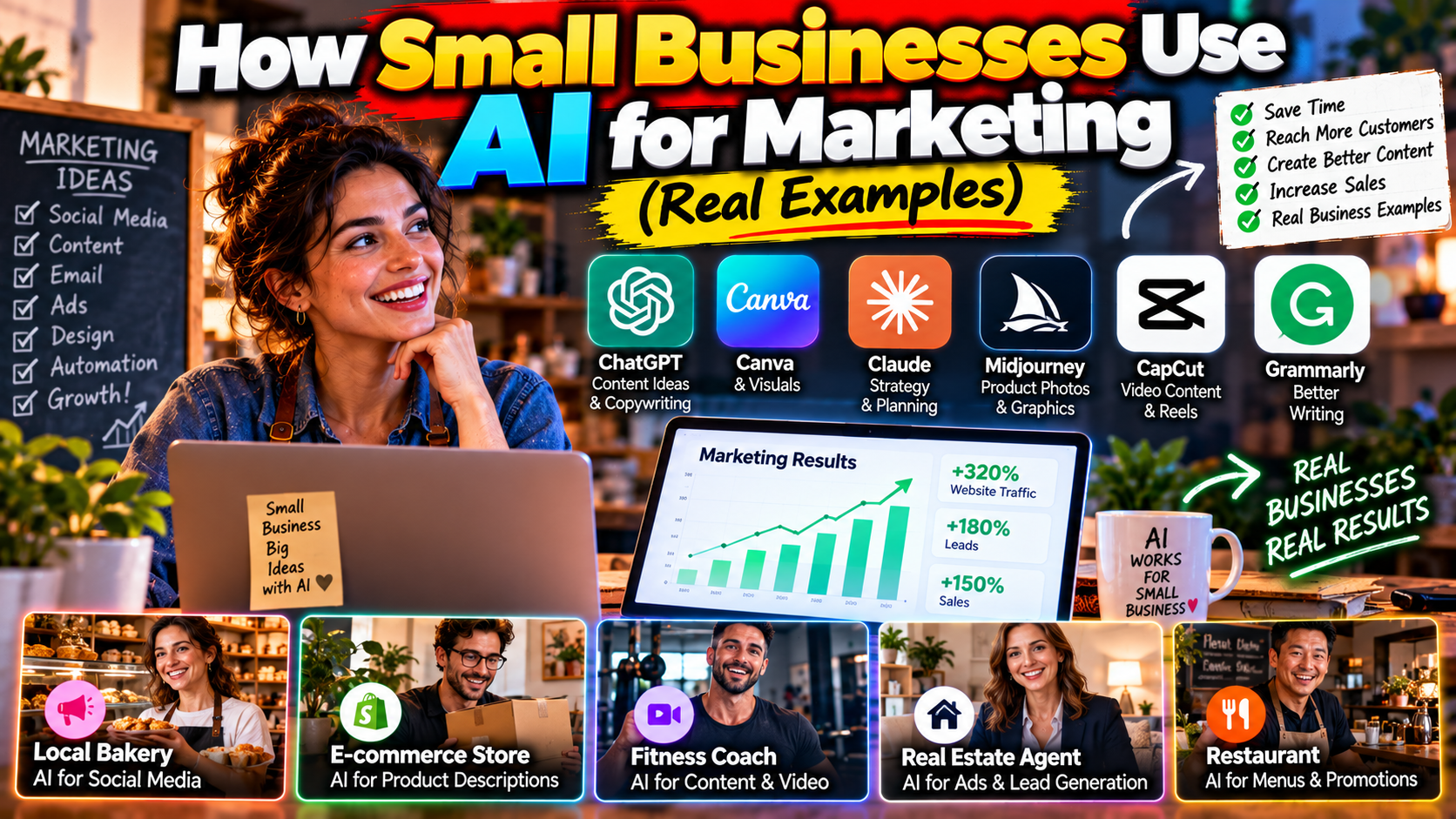
Big companies have marketing departments. You have… you. And maybe an employee who “does the Instagram.” Here’s the good news: AI has quietly become the great equalizer in marketing. A one-person business can now produce like a team of five. Small businesses — clothing manufacturers included — are transforming their marketing with AI right now. Here are real, practical examples of how.
1. Content That Doesn’t Take Weekends
The bakery that posts daily? The boutique with a blog? They’re probably using AI for first drafts. The workflow: owner dictates ideas as voice notes, ChatGPT turns them into post drafts, owner edits in their voice. A week’s social content in one sitting. The key: the owner’s stories and opinions go in — AI just does the structuring. Customers can tell the difference between AI slop and AI-assisted authenticity. Be the second one.
2. Product Descriptions at Scale
A clothing manufacturer with 200 products can’t hand-write 200 compelling descriptions. AI generates solid first drafts from specs and photos — fabric, fit, care instructions turned into readable copy. One person reviews and polishes instead of writing from scratch. This is arguably the highest-ROI AI marketing use there is: boring, unsexy, massively time-saving. The descriptions won’t win literary prizes, but they’ll be consistent, complete, and done — which beats perfect-but-nonexistent every time.
3. Ad Creative Variations
Running Facebook or Instagram ads? You need dozens of variations to find winners. AI generates headline options, primary text angles, and hook variations in minutes. Canva’s AI tools resize and reformat creatives for every placement automatically. What used to take a designer a day takes an afternoon — and you test 10x more variants, which is what actually improves ad performance. More variants tested means faster learning about what your audience responds to.
4. Email That Writes Itself (Almost)
Abandoned cart emails, welcome sequences, restock announcements — AI drafts them all from a one-line brief. The smart businesses keep a human in the loop for tone, but the heavy lifting is automated. A small store’s email list is often its most valuable asset; AI makes actually using it feasible instead of aspirational.
5. Customer Replies in Seconds
“What are your sizes?” “Do you ship to Lahore?” “Is this in stock?” AI chat assistants handle the repetitive 80% of customer questions instantly, 24/7, escalating the tricky 20% to humans. Response time is a conversion factor — the business that answers in 10 seconds beats the one that answers tomorrow. Just make sure the handoff to a human is smooth; nothing kills trust faster than a bot pretending to be a person when things get complicated.
6. The Secret Weapon: Repurposing
One video becomes: a blog post (transcript → article), 5 social clips (highlights), an email (summary), and 10 quote graphics. AI does the transformations; you just review. Small businesses sit on goldmines of content they made once and never reused. AI is the excavation crew — and most businesses are sitting on richer veins than they realize.
What NOT to Do
Don’t let AI invent testimonials, reviews, or statistics — that’s fraud with extra steps. Don’t publish unedited AI content (your customers aren’t stupid). And don’t automate the personal touch away entirely — the “handwritten” thank-you note still beats the automated one. AI should make your marketing more human by handling the robotic parts, not less human by handling everything. The businesses that get this backwards end up with efficient marketing that nobody trusts.
Start This Week
Pick ONE use case — product descriptions, social drafts, or email. Spend two hours setting up the workflow, run it for a month, measure the time saved. Then add the next one. The businesses winning with AI marketing aren’t the ones with the fanciest tools — they’re the ones that started. And track one metric per experiment — time saved, engagement rate, reply speed. AI marketing isn’t about doing everything; it’s about finding the two or three workflows that pay for themselves and ignoring the rest. The businesses drowning in AI tools are doing worse than the ones mastering a single workflow. Depth beats breadth, every time. More marketing AI in AI tools and strategy in tutorials.
Related Reading
Keep exploring: How to Use Instagram Reels to Grow in 2026, How to Create a YouTube Channel in 2026, and How to Install WordPress Plugins: 3 Methods Explained.