
iPhone 17 Pro vs Galaxy S26 Ultra: Which Flagship Wins in 2026?
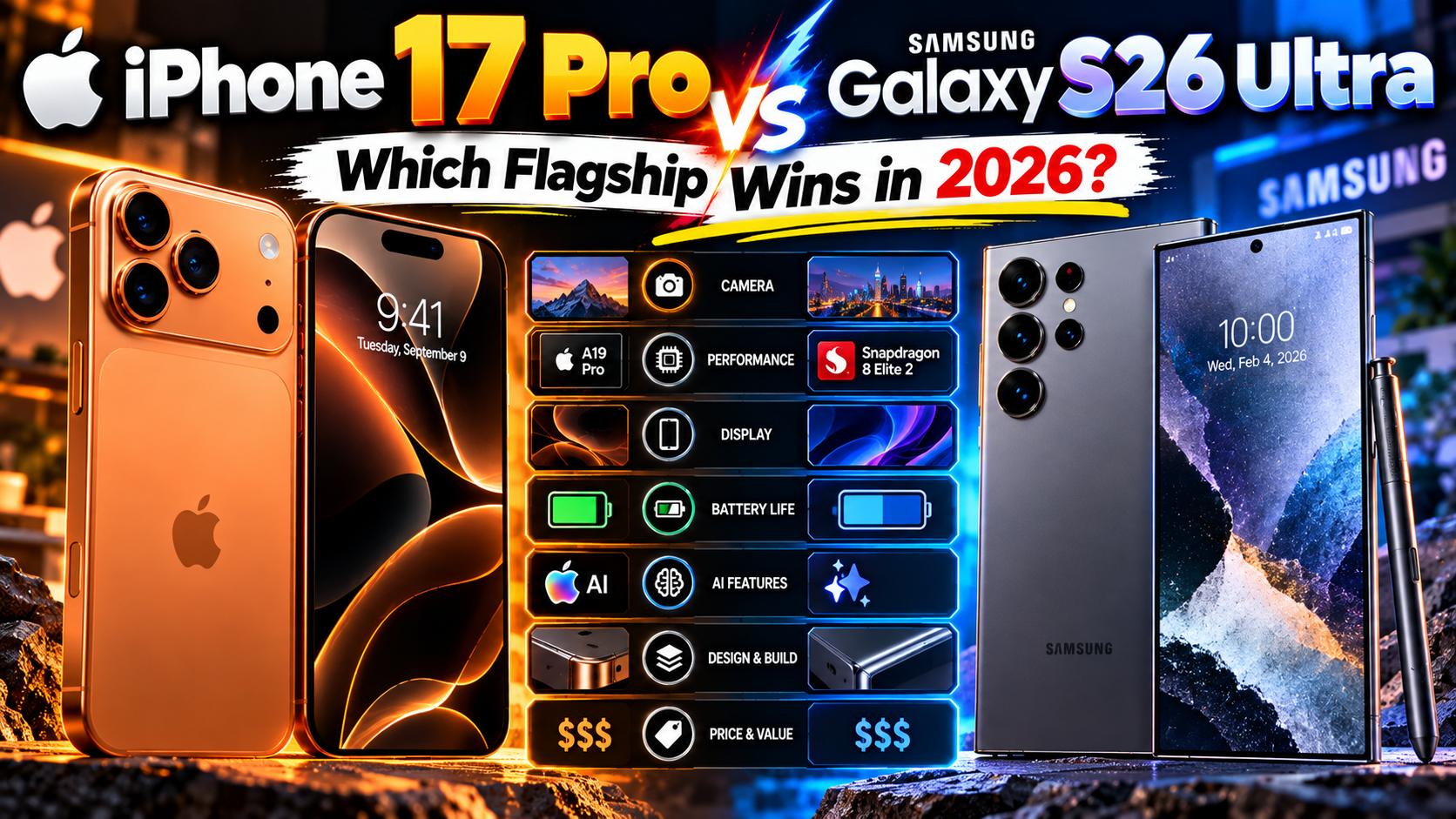
The two best phones on Earth, head to head. iPhone 17 Pro versus Galaxy S26 Ultra. A19 Pro against Snapdragon 8 Elite Gen 5. Triple cameras against quad cameras. iOS 26 against One UI 8.5. Both cost flagship money, both claim the crown. This comparison goes category by category — design, display, camera, battery, performance, software, AI, price — based on published specs and professional reviewer consensus, and picks a winner each round. No fanboyism. Just verdicts.
Round 1: Design and Build
Both titanium, both IP68, both feel like $1,200 in the hand. The iPhone 17 Pro refined Apple’s design — new camera plateau, slightly lighter frame at ~199g versus the Ultra’s ~218g. Noticeably more comfortable one-handed. The S26 Ultra is bigger and boxier, with the S Pen silo adding functionality nobody else has.
Looks are subjective; ergonomics aren’t. iPhone wins on comfort, Samsung wins on presence. No headphone jack on either (obviously), USB-C on both (finally universal), both survive drops better than their predecessors. Winner: iPhone 17 Pro — lighter and more comfortable, though the S Pen keeps it close.
Round 2: Display
Two exceptional OLEDs. The iPhone’s 6.3-inch ProMotion (1–120Hz) against the Ultra’s 6.9-inch QHD+ (1–120Hz) with anti-reflective coating. Samsung’s is bigger, higher-resolution, and the anti-reflective layer is genuinely better outdoors — reviewers consistently call it the best phone display available.
The iPhone’s screen is superb but conventional by comparison. Its edges: color consistency across Apple devices, slightly better HDR video handling. If screen size matters to you — media, gaming, split-screen — Samsung wins outright. Winner: Galaxy S26 Ultra — the coating and the size advantage are decisive.
Round 3: Camera
The heavyweight bout. The iPhone 17 Pro’s triple 48MP system (main, ultrawide, 5x tetraprism telephoto) takes the most consistent, natural-looking photos — best-in-class video, superb low light, color science professionals trust. The S26 Ultra’s quad system (200MP main, 50MP ultrawide, 3x + 5x telephotos) offers more versatility: dual telephotos covering more focal lengths natively, 200MP sensor for dramatic cropping.
Daylight detail goes to Samsung. Video goes to Apple. Low light is a wash with different strengths. For most people the iPhone’s consistency wins — great photos, zero effort. For enthusiasts who zoom, crop, and shoot RAW, the Ultra’s hardware ceiling is higher. Winner: Tie — iPhone for point-and-shoot excellence, Samsung for versatility and zoom.
Round 4: Battery and Charging
The S26 Ultra’s 5,400mAh silicon-carbon battery delivers genuine two-day life for moderate users — the best endurance of any mainstream flagship. The iPhone 17 Pro’s smaller battery manages a full day comfortably, a day and a half for light users. Excellent by iPhone standards. Not Ultra-class.
Charging: Samsung’s 45W wired beats Apple’s ~30W; both do 15W+ wireless and reverse wireless. Neither touches Chinese flagships’ 100W speeds, but Samsung’s endurance advantage is the real story here. Winner: Galaxy S26 Ultra — two-day battery is a category-defining lead.
Round 5: Performance
The A19 Pro and Snapdragon 8 Elite Gen 5 trade benchmark crowns. Apple leads single-core and efficiency; Qualcomm leads sustained GPU. In real use both are overkill — every app instant, every game maxed, years of headroom.
The difference is philosophical. Apple’s vertical integration gives slightly better sustained efficiency — less heat, longer battery under load. The Ultra’s vapor chamber handles gaming marathons better. Both get 7+ years of updates (Apple’s track record, Samsung’s commitment). Winner: Tie — flip a coin, you’ll never feel the difference.
Round 6: Software and Ecosystem
iOS 26 versus One UI 8.5. Honestly, this is the real decision for most buyers. iOS: unmatched polish, strong privacy defaults, the Apple ecosystem — Mac, Watch, AirPods, and yes, the iMessage/FaceTime lock-in is real. One UI: more customization, better multitasking (DeX desktop mode, S Pen), openness (sideloading, default app choice, USB-C freedom).
Neither is objectively better. It’s ecosystem gravity. The hidden price is switching costs — your watch, earbuds, apps, family sharing all anchor you. Winner: Depends on your ecosystem. Don’t switch ecosystems for a phone. Buy the best phone in the one you’re already in.
Round 7: AI Features
Galaxy AI — live translate, generative photo edit, Circle to Search, agentic cross-app actions — is broader and more integrated than Apple Intelligence (writing tools, notification summaries, Visual Intelligence, the ongoing Siri rebuild). Reviewers rate Samsung’s suite more useful day to day; Apple’s on-device privacy approach is philosophically stronger.
Both free for now, both expanding via updates. Winner: Galaxy S26 Ultra — broader, more mature AI feature set today.
Round 8: Price and Value
Both start around $1,199 for base storage. Then street prices diverge fast. Samsung flagships reliably drop 20–30% within months, carriers discount aggressively. iPhones hold value stubbornly — great for resale, bad for bargain hunters. Total cost of ownership favors iPhone (higher resale); upfront deals favor Samsung. Check current pricing at Apple and Samsung.
Winner: Galaxy S26 Ultra on upfront deals; iPhone 17 Pro on resale value.
Final Verdict: Which Should You Buy?
The tally: Samsung takes display, battery, AI, and deals. Apple takes design comfort and resale. Camera and performance tie. Software comes down to your ecosystem. But the tally was never the real answer — your ecosystem is.
iPhone user with a Mac and AirPods? The 17 Pro is your phone; switching costs dwarf any spec advantage. Android user, or ecosystem-free? The S26 Ultra is the more capable device — better display, better battery, more versatile cameras, stylus, stronger AI.
The phone-nerd pick: Galaxy S26 Ultra, 9/10. The safe pick in Apple’s world: iPhone 17 Pro, 9/10. Either way you’re holding one of the two best phones ever made. Good problem to have. And honestly? Whichever you choose, you’ll stop thinking about the comparison within a week — both are so good the differences fade into daily life. That’s the real luxury of buying at the top in 2026. For more buying guides, explore our Tutorials section and Tech News.
Related Reading
Keep exploring: Why Every Phone Brand Is Adding an AI Button in 2026, USB-C Won the Charger War: What It Means for Your Next Phone, and 5G Advanced Is Rolling Out: Should You Actually Care?.