
Meta Ray-Ban Display Glasses Review: AI You Wear on Your Face
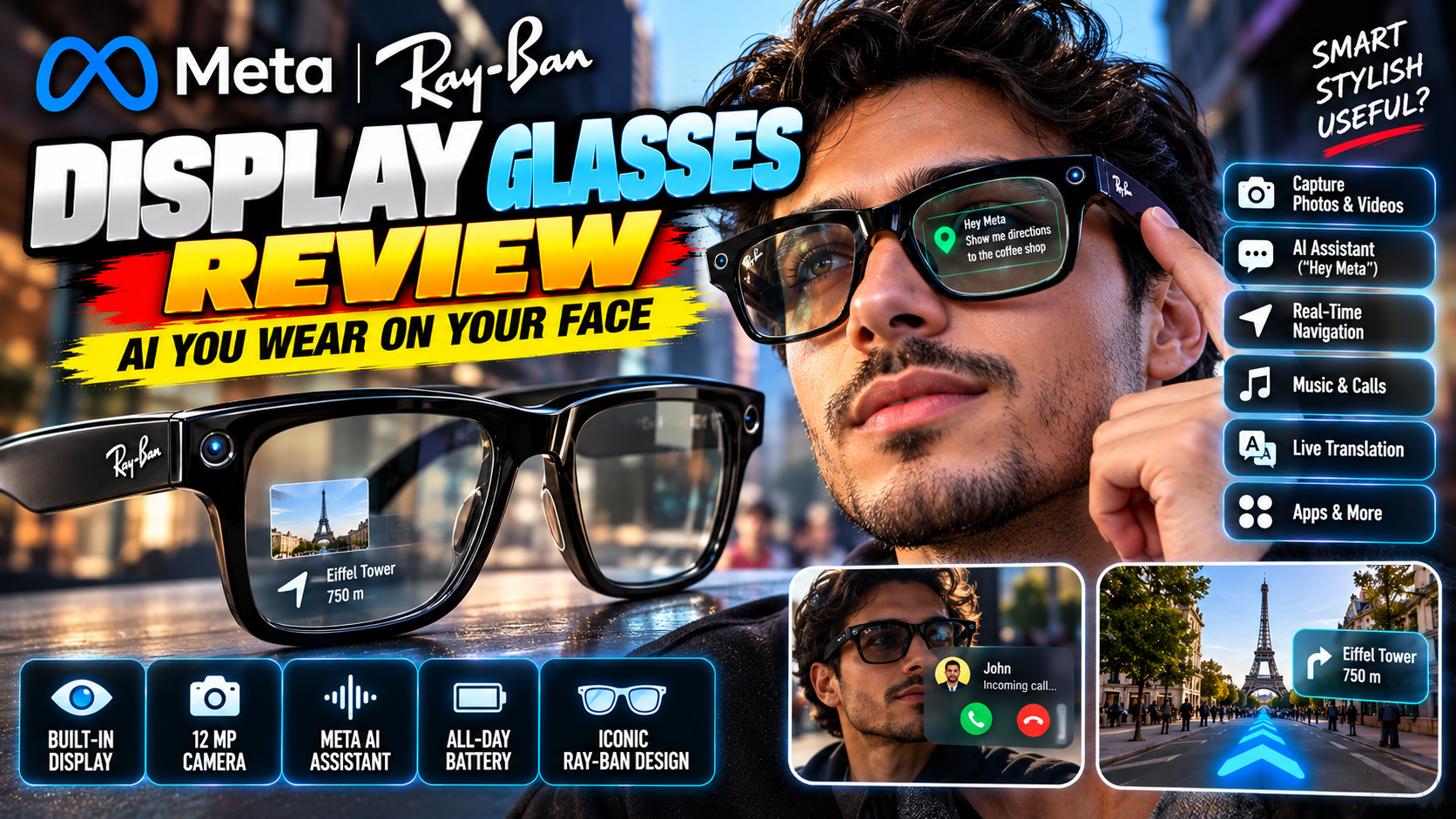
Smart glasses have been “the future” for a decade. Mostly they’ve been a disappointment. Meta’s Ray-Ban Display glasses, launched at Meta Connect 2026, are the first pair that feels like the future actually showing up: full-color display in the lens, Meta AI on “Hey Meta” voice command, 12MP camera, and a design that mostly passes as normal glasses. $799 starting price — not cheap. But they’re the first smart glasses I’d point a normal person toward. This review covers the display, AI features, camera, battery, and the big questions around price and privacy, based on launch specs and early professional reviewer impressions.
Design: Normal Glasses (Almost)
The triumph here is that they look like glasses, not a gadget. The Wayfarer-inspired frame hides the tech remarkably well — you’d only spot the display waveguide if you went looking, and the camera is a subtle dot on the bridge.
They’re heavier than regular glasses. Noticeable, but most wearers find them comfortable enough. Multiple frame colors and sizes, prescription lenses supported (extra cost, fitted through participating opticians). The charging case looks like a slightly chunky glasses case and holds multiple recharges. Credit where it’s due — Meta and Ray-Ban pulled off what everyone else failed at. Every previous display-glasses attempt looked like a Star Trek prop. These look like something you’d wear to dinner.
The Display: A Screen in Your Sight
One lens only — the right one — projecting a full-color interface into your field of view. Think a small phone screen floating at arm’s length. This isn’t sci-fi AR with 3D objects anchored in the world. It’s a heads-up display for information: messages, navigation arrows, live translations, Meta AI responses, photo previews.
Reviewers say it’s bright enough outdoors, sharp enough for comfortable reading, and — this is the key part — socially subtle. Nobody across the table knows you’re reading a text. The limitation is field of view: a compact display window, not immersive AR. For notifications and quick glances, perfect. For watching videos? Use your phone.
Meta AI: The Real Product
Here’s the thing people miss: the glasses are hardware, Meta AI is the product. “Hey Meta” wakes an assistant that answers questions about what the camera sees (“what am I looking at?”), translates conversations live — subtitles for real life, the killer demo — identifies plants, landmarks, and products, sets reminders, reads messages aloud, and does turn-by-turn navigation.
Early reviewers say the multimodal understanding, AI that sees what you see, is the genuinely magical part. And it keeps improving through software updates. The 2026 neural wristband (sold separately) adds mid-air gesture control — pinch, scroll, tap — which reviewers call surprisingly intuitive after a day. Check Meta’s official pages for the current feature set; it expands regularly.
Camera and Media
12MP camera, 3K video. Solid for hands-free memories, not a phone camera replacement. The whole point is capturing moments you’d miss fumbling for your phone — your kid’s first steps, a concert, a bike ride.
Stabilization is decent. Audio through the open-ear speakers is clear for calls and music without sealing off your ears. The LED indicator lights up while recording — Meta’s answer to the privacy question, though how visible it really is has been debated. Storage syncs to the Meta View app; 32GB onboard holds about a day’s captures.
Battery Life: Good Enough
Meta claims 6 hours of typical mixed use. The charging case holds several full recharges, so top up at lunch and you’re covered all day. Heavy camera and AI use drains faster — more like 3–4 hours of intensive use. Reviewers find the claims roughly accurate.
The case charges over USB-C, and 20 minutes gives you hours of use. It’s the standard smart-glasses compromise: not yet “forget the charger” territory, but past “battery anxiety” territory for normal use. Good enough is the right label.
Price, Privacy, and the Honest Caveats
$799, plus prescription costs, plus the optional wristband. Early-adopter pricing, no question — though it’s dramatically cheaper than the $3,500 Apple Vision Pro and in line with premium headphones.
The privacy conversation is real and shouldn’t be hand-waved. Glasses with a camera raise legitimate questions, and Meta’s data practices deserve scrutiny. Meta’s answers: on-device processing for many AI tasks, the recording indicator light, granular privacy controls in the app. Whether that’s enough is your call. Worth noting the glasses are far more discreet than holding up a phone — which cuts both ways.
Also honest: the software is still maturing, first-gen quirks exist, and the app ecosystem for glasses is brand new. You’re buying into potential as much as product.
The Competition: Who Else Is in the Game?
Meta isn’t alone, but it’s ahead. Snap’s Spectacles (5th gen) target developers with true AR displays — cost more, not sold to consumers. Apple’s Vision Pro is a different universe: $3,500, immersive, indoor. Xreal and RayNeo make display glasses that tether to your phone — cheaper, but no Meta AI ecosystem, no standalone smarts.
The real looming rival is Google’s Android XR glasses with partners like Samsung, expected to bring Gemini to eyewear. Not here yet, though. Meta’s head start in hardware refinement and AI integration is significant. For 2026, if you want AI glasses you can buy today that look normal, Meta’s the only serious option.
Verdict: Who Should Buy Them?
Buy if: you’re a tech early adopter, you travel a lot (live translation is transformative), you capture tons of hands-free content, or you want the most advanced consumer AI wearable available.
Wait if: $799 stings (gen two will be cheaper and better), camera-glasses make you uneasy, or your prescription is complex (check compatibility first).
Score: 8/10. The first smart glasses that feel like a product instead of a prototype. The future isn’t here yet — but you can see it from here, literally, in the corner of your right eye. For more wearable tech coverage, explore our Tutorials section and Tech News.
Related Reading
Keep exploring: Smartwatch Buying Guide 2026: 6 Things That Actually Matter, Why Every Phone Brand Is Adding an AI Button in 2026, and ChatGPT vs Claude vs Gemini: Which AI Should You Actually Pay For?.