Pakistan’s Startup Comeback: $133.7M Raised in 2026 as Funding Roars Back
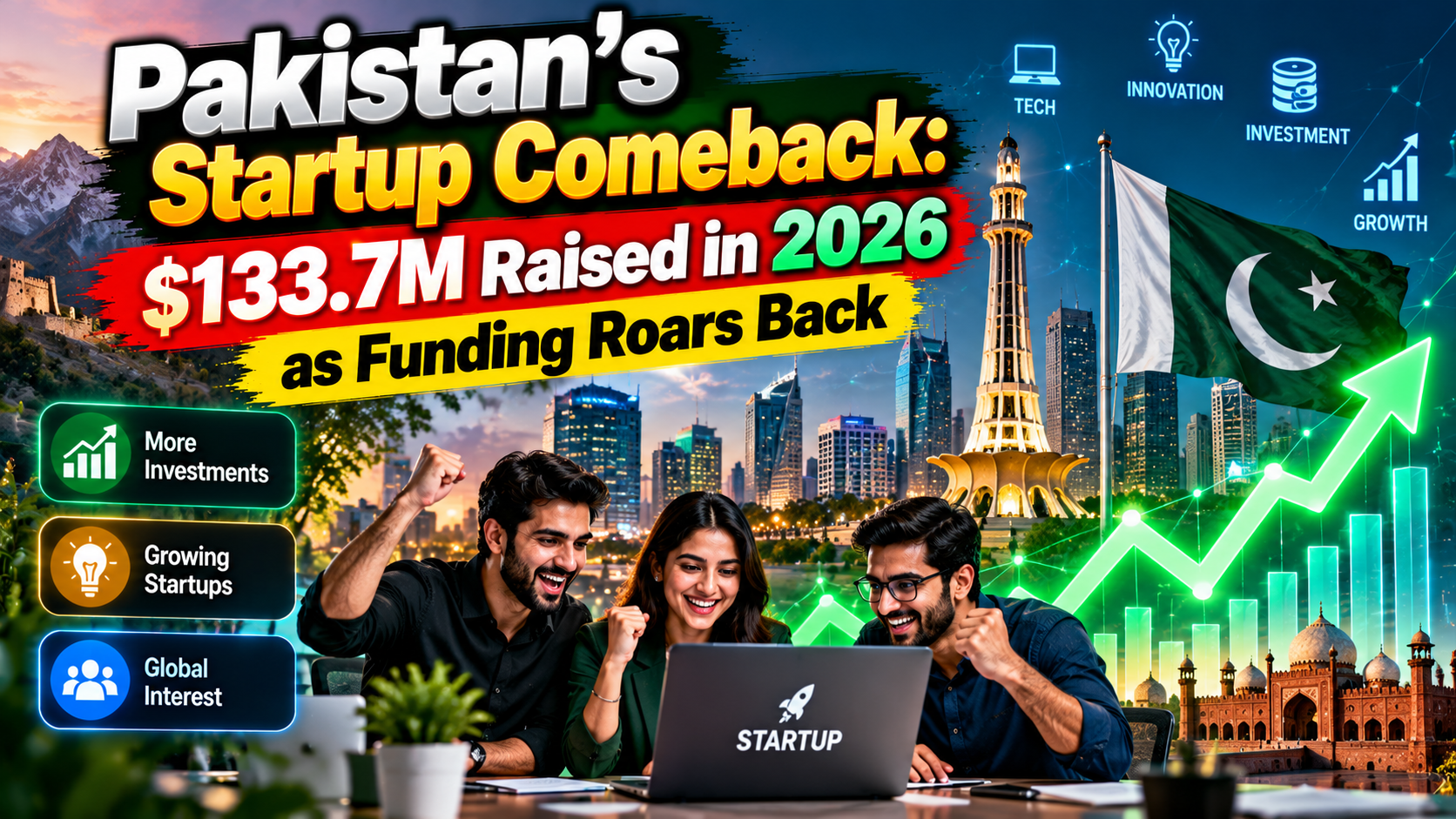
Pakistan’s startup ecosystem is back. After years in the funding wilderness, Pakistani startups raised $133.7 million across 10 deals in 2026 so far — with the third quarter alone bringing $74.7 million, five times the same quarter last year. A $68 million mega-round, a new $10 million government fund, and a maturing pipeline of companies all point the same way. This isn’t a blip. It’s a comeback.
The Numbers: A Quarter Like No Other
Per i2i Ventures’ Q3 2026 report, the $74.7 million raised in Q3 is 5x growth over last year’s Q3 — the kind of number that forces investors to rethink their assumptions about a market. Ten deals totaling $133.7 million year-to-date puts 2026 on track to be Pakistan’s best funding year since the 2021–2022 boom.
Context matters. Pakistan’s ecosystem went through a brutal correction: the global venture pullback dried up funding, high-profile startups shut down or pivoted, and the narrative slid from “the next big emerging market” to “too risky.” The founders who kept building through those years — couldn’t raise, cut burn, found revenue, survived — are the ones raising now. This comeback is built on resilience, not hype. Arguably healthier than the last boom.
Fasset’s $68M: The Round That Changed the Conversation
The quarter’s anchor: Fasset’s $68 million Series C at a $1 billion valuation. A genuine unicorn round, and one of the largest in Pakistan’s history. A billion-dollar valuation for a Pakistani startup in 2026 does something no report can — it proves the exit math works. Investors need to believe Pakistan can produce venture-scale returns. Fasset just handed them the evidence.
Big anchor rounds ripple across the ecosystem. They pull in international investor attention (“what else is in that market?”), they mint experienced operators who go on to found or fund the next generation, and they give local talent reasons to stay instead of emigrating. Pakistan’s brain drain has been the ecosystem’s quiet crisis — every unicorn makes staying a little more rational for the next brilliant engineer weighing Lahore against London.
The Government Steps In: Pakistan Startup Fund 2.0
The government announced a $10 million Pakistan Startup Fund 2.0 — modest globally, significant as a signal. Government funds work best as catalysts rather than primary capital: co-investing with private VCs, de-risking early-stage bets, signaling policy support.
The real question is whether the policy environment keeps improving. Pakistani founders have cited the same obstacles for years: painful foreign investment flows, tax complications, payment gateway limitations, regulatory uncertainty. A $10 million fund is welcome; fixing the structural friction would be transformative. The founders who survived the downturn learned to navigate these obstacles — imagine what they could do without them.
The Global Backdrop: AI Dominates
Pakistan’s recovery is unfolding against a global funding market owned by AI. The numbers are staggering: AI startups raised $1.8 billion across just 21 rounds in October 2026 alone. Oxide’s $445 million Series D (led by Eclipse) was the month’s biggest tracked round. Mecka AI raised $60 million led by Sequoia to collect human motion data for training robots — with Nvidia, Microsoft’s M12, Qualcomm Ventures, and Samsung all piling in.
And then there’s DeepSeek. The Chinese AI lab is closing a roughly $12 billion funding round backed by Tencent and CATL, ahead of a possible early-2027 IPO, after hitting a $1 billion annualized revenue run rate. The round blew past its original target — investors are fighting to get in. When one AI round is worth nearly 100x Pakistan’s entire annual startup funding, the scale gap is humbling. It also shows where the global puck is heading, and Pakistani founders are paying attention.
Where Pakistan Fits in the AI Wave
Here’s the honest assessment: Pakistan won’t compete with the US and China on foundation models. The compute and capital requirements are prohibitive. But the AI wave opens enormous space in the application layer: AI services for local languages (Urdu NLP is still underserved), vertical AI for textiles, agriculture, logistics (Pakistan’s real economy), and AI services outsourcing (the country’s IT exports are already climbing).
The ecosystem’s strengths fit this well: a large English-speaking technical workforce, cost advantages in building and training, a huge domestic market for testing products, and a diaspora bridging to global markets and capital. The weaknesses are equally plain: thin late-stage capital, infrastructure gaps, and the ever-present macro volatility that makes long-term planning hard.
What to Watch
Three things decide whether 2026 is a true inflection point or just a good quarter. First, follow-on funding: do the Q3 companies raise their next rounds at higher valuations, or was this a one-time catch-up? Second, new fund formation: are local and regional VCs raising Pakistan-dedicated funds — the sign of sustained institutional commitment? Third, exits: the ecosystem needs acquisitions and IPOs to recycle capital and talent. Fasset’s valuation is a promise; an actual liquidity event is proof.
Founders reading this: the window is open. Investor attention is back, the survivors have solid fundamentals, and the government is (cautiously) supportive. The last boom’s mistakes — growth at all costs, vanity metrics, ignoring unit economics — are fresh enough to avoid. Build real businesses, solve real problems, and the funding follows. It already is. And for international investors who skipped Pakistan during the downturn: entry valuations are still reasonable, the talent is proven, and the Q3 numbers say the risk premium is shrinking. The smart money is already looking. The question is who moves first.
Pakistan’s startup story was never about matching Silicon Valley dollar for dollar. It’s about building a self-sustaining ecosystem that produces world-class companies despite the obstacles. Q3 2026 says that ecosystem is alive, growing, well-funded — and done being underestimated. For more startup and tech coverage, follow our Tech News section and practical guides in Tutorials.
Related Reading
Keep exploring: How to Install WordPress Plugins: 3 Methods Explained, How to Create a YouTube Channel in 2026, and How to Use Instagram Reels to Grow in 2026.