
How to Grow on TikTok in 2026: A Beginner’s Step-by-Step Strategy
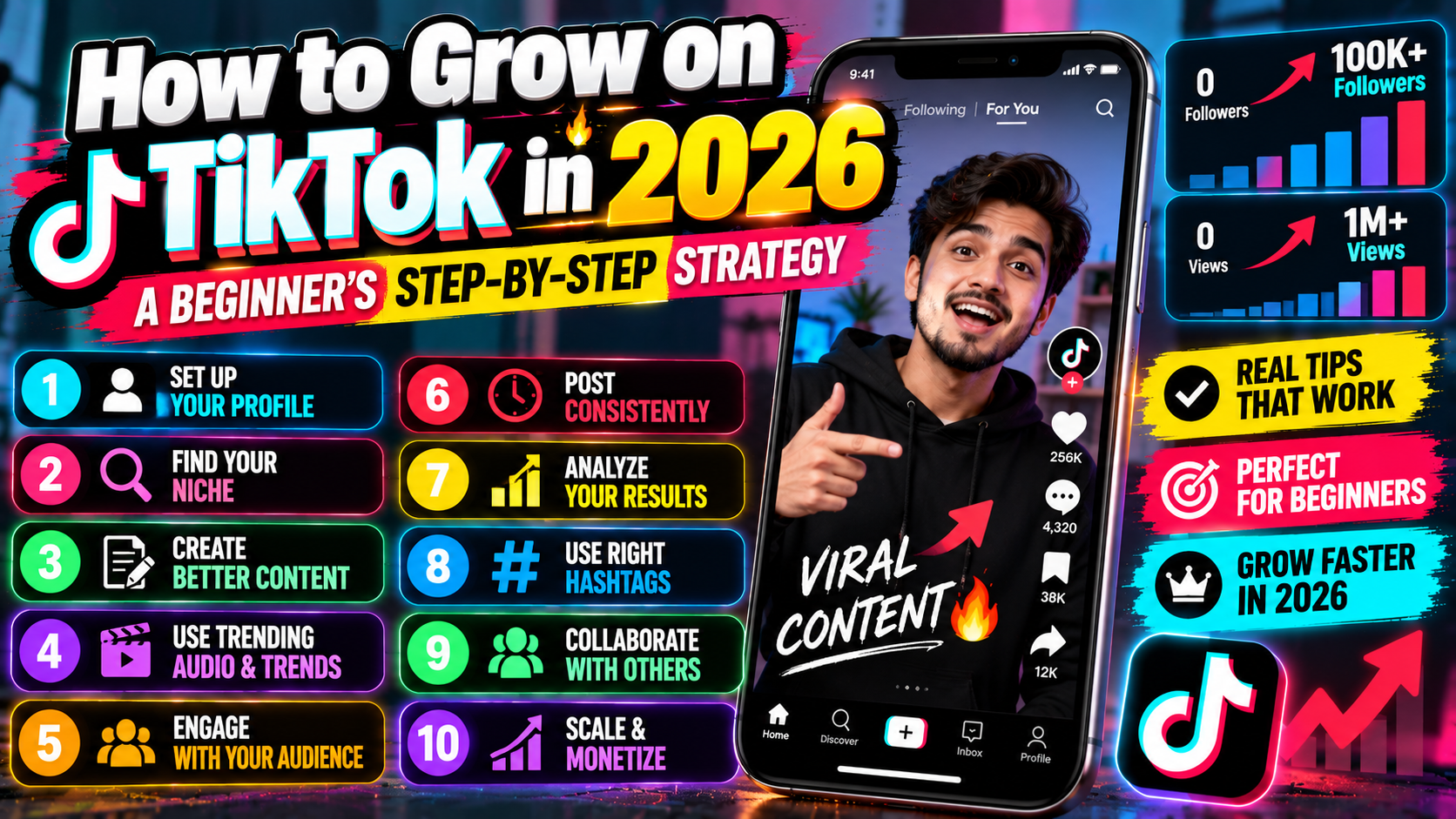
TikTok in 2026 is the most meritocratic social platform ever built. A brand-new account can reach a million people with its third video — try doing that anywhere else. But “anyone can go viral” has an evil twin: “almost everyone stays invisible.” And the difference between those two outcomes isn’t luck. It’s understanding how the machine works and feeding it what it wants. This is the complete beginner’s playbook: account setup, content system, and the growth mechanics that actually matter.
Step 1: Set Up Your Account Right
First move: switch to a Creator or Business account immediately (Settings → Manage account → Switch to Pro). Why? Analytics. Without data, you’re just guessing. Next, pick a clear username — your niche plus your name beats clever wordplay that nobody can spell. Write a bio that tells viewers what they’ll get (“Daily phone tips 📱” beats “Just vibes ✨” every time). Use a recognizable profile photo — your face outperforms logos for personal brands. And here’s the critical decision: pick ONE niche for your first 50 videos. The algorithm has to learn who likes your content before it can find more of those people at scale. “I’ll post about everything” is how you get shown to no one.
Step 2: Understand the Algorithm (It’s Simpler Than You Think)
Every video you post gets tested on a small audience first — a few hundred views. If the early signals are strong, TikTok pushes it to bigger and bigger audiences. The signals that matter, ranked: completion rate (what percentage watches to the end — the number one factor, not even close), rewatches, shares, comments, and finally likes (the weakest signal, despite what most people assume). The takeaway changes everything: make videos people finish. A 15-second video with 90% completion will beat a 60-second video with 30% completion every single time. Short. Complete. Rewatchable. That’s the formula, and everything below exists to serve it.
Step 3: Master the Hook (First 2 Seconds)
You get about two seconds before the thumb swipes. The hook isn’t your intro — it’s the reason to stay. Formulas that consistently work: the bold claim (“This setting is draining 40% of your battery”). The open loop (“Wait for the third one — it shocked me”). The direct callout (“If your phone is slow, do this right now”). The visual hook (start mid-action — never with a logo, never with “hey guys”). Record your hook separately and lead with your strongest take. Then watch your own video and ask honestly: would I stop scrolling for this? If the answer is no, reshoot those first two seconds. Most failed TikToks don’t die in the content. They die in the hook.
Step 4: The Content System (What to Post)
You need a repeatable format, not random bursts of inspiration. Pick 2–3 content pillars — for a tech account, say: (1) quick tips, (2) app recommendations, (3) myth-busting. Then build series inside those pillars (“Phone Setting of the Day #47”). Series create follow-habits; viewers come back for the next installment like it’s a show. Batch creation is non-negotiable: film 7–10 videos in one sitting, edit them across the week. Chasing daily inspiration burns you out by week three. Systems carry you into year two. And steal like an artist — find viral videos in your niche, study their structure (not their content), and apply that structure to your own ideas. For platform changes and new features, TikTok’s official creator resources are worth bookmarking.
Step 5: Posting Schedule and Timing
Post 1–3 times a day for your first 90 days. Yes, really. Volume is how the algorithm learns your audience fastest, and every video is a lottery ticket with better odds than you’d think. After day 90, once you know what works, you can ease back to once daily. Timing matters less than consistency, but here’s a starting point: post when your audience is awake and scrolling. Once you have data, check Analytics → Followers → Follower activity and adjust to your actual audience. Those “best time to post” charts floating around online are generic. Your analytics are specific. Trust yours.
Step 6: Captions, Hashtags, and Sounds
Captions: ask a question, or add context the video doesn’t cover. Comments are a top-tier ranking signal, and questions generate them — “Which one surprised you most?” beats “Hope you like it!” Hashtags: use 3–5 relevant ones. Mix one broad (#tech), two niche (#androidtips), and one trending if it’s genuinely relevant. Hashtags help TikTok categorize your video; they don’t cause virality, so don’t obsess. Sounds: trending audio gets a small discovery boost through the sound page, but never force a trending sound that doesn’t fit your video. Original audio with a clear voiceover beats a mismatched trend every time. And always burn captions into the video itself — most people watch with sound off at first, and accessibility quietly expands your audience.
Step 7: Engage Like Your Growth Depends on It (It Does)
Reply to comments with video replies. This is TikTok’s most underused growth feature, and it’s sitting right there. A video reply to a good question turns engagement into content — and the person who asked becomes a loyal follower. Beyond that, spend 30 minutes a day engaging properly: answer your comments, leave thoughtful comments on bigger creators’ videos in your niche (get in early — first comments get seen), and duet or stitch relevant viral videos with genuine added value. The algorithm notices creators who keep people on the platform. Engagement is how you prove you’re one of them.
Step 8: Read Analytics Weekly (The Feedback Loop)
Every Sunday, give Analytics 20 minutes. For each video, note three things: views, completion rate, traffic source. Find your top 3 by completion rate — what do they share? Topic? Length? Hook style? Make more of that. Find your bottom 3 — what went wrong? Slow hook? Too long? Muddled point? Stop doing that. This weekly review is the entire difference between creators who improve and creators who post the same failing video 200 times. The data is free and brutally honest. Use it.
Step 9: Avoid the Growth Killers
A few things quietly strangle TikTok growth, so let’s name them. Watermarked content: reposting Instagram Reels with the watermark gets suppressed — always upload native. Flip-flopping niches: the algorithm can’t learn your audience if you won’t sit still. Deleting underperformers: old videos can randomly take off months later, and deleting also erases their data. Don’t. Buying followers: fake followers crater your engagement rate, which craters your reach — the worst trade in all of social media. Community violations: even minor strikes throttle your reach, so actually read the guidelines at TikTok’s official site and keep your account clean.
The 90-Day Plan
Days 1–30: post twice daily, test your 3 content pillars, find your voice. Expect low views — you’re training the algorithm, and honestly, you’re training yourself. Days 31–60: double down on whichever pillar performed best, launch a series, engage 30 minutes a day. Days 61–90: patterns should be emerging — which topics pop, which hooks land. Refine ruthlessly. By day 90, most consistent creators hit their first viral video and finally understand their audience. The people who quit at day 30 never find out what day 90 feels like. So post the video. Then post the next one. For more social media strategy, our Tutorials section has you covered — and Tech News keeps you posted on platform changes.
Related Reading
Keep exploring: CapCut for Android.