
How to Spot an AI Voice Scam Call Before It Fools You
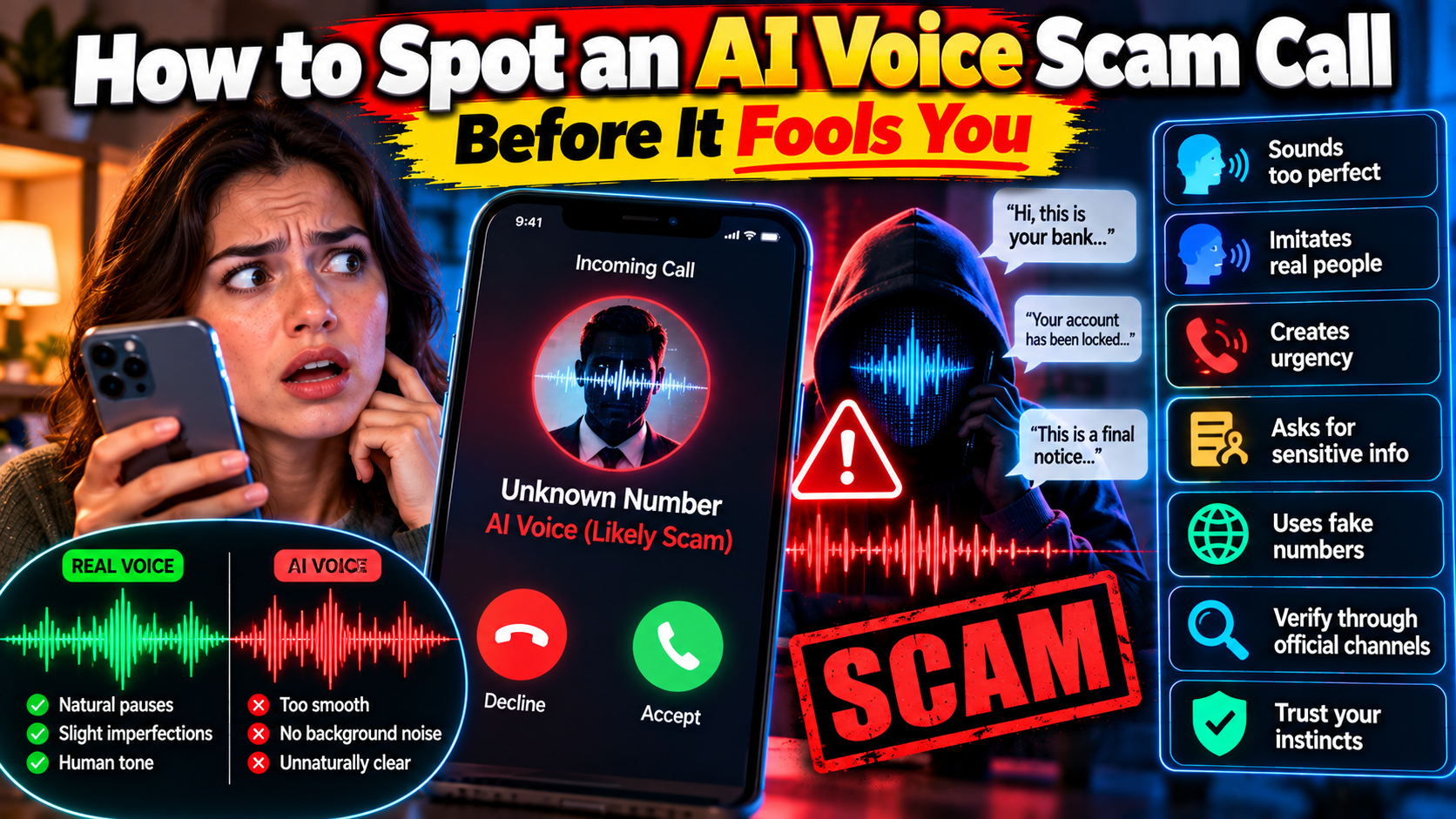
Imagine your phone rings. It’s your mother’s voice — panicked, saying she’s in trouble and needs money sent right now. Except it isn’t your mother. It’s an AI wearing her voice like a costume.
This isn’t science fiction anymore. Modern voice-cloning tools can recreate someone’s voice from as little as 10 seconds of audio — a voicemail, a TikTok clip, a video call recording. Scammers know this. So here’s how to protect yourself and your family, step by step.
Step 1: Know the Warning Signs
AI voice scams follow a pattern. Watch for these red flags:
- Manufactured urgency. “Don’t tell anyone, act NOW.” Real emergencies don’t forbid you from verifying.
- Odd phrasing or flat emotion. Cloned voices nail tone but often miss the small human touches — the pause before bad news, the specific pet names your family actually uses.
- They dodge verification. Ask “what did we have for dinner last Sunday?” A scammer deflects. Your real relative answers.
- Weird audio texture. Slight robotic edges, unnatural breathing, or background noise that doesn’t match the story.
- Money via gift cards, crypto, or wire transfer. Legitimate emergencies don’t demand Steam gift cards.
Step 2: Set Up a Family Code Word (Do This Today)
This is the single most effective defense, and it takes five minutes. Pick a secret word or phrase with your close family — something no scammer could guess, not your pet’s name or anything on social media. Make it weird. “Purple pickle.” “The pigeon’s accountant.” Whatever sticks.
The rule: any urgent money call must include the code word. No code word, no money, no exceptions. Tell your parents. Tell your grandparents — they’re the prime targets. A scammer with a perfect voice clone still can’t produce a word they never heard.
Step 3: The Hang-Up-and-Call-Back Rule
Got a scary call from a “relative”? Hang up. Then call them back on the number you already have saved — not any number the caller gives you. This one habit defeats nearly every voice scam, because the scammer can’t intercept your outgoing call.
And while you’re at it: never say “yes” to a stranger’s questions on an unknown call. Scammers record affirmative answers to authorize things later. A confused “hello?” is fine. “Yes, this is him” is not.
Step 4: Lock Down Your Voiceprint
Make it harder for scammers to harvest your voice in the first place:
- Set social media videos to friends-only where possible.
- Remove your voice from public voicemail greetings — use the carrier’s default instead.
- Be careful with “can you hear me?” calls from unknown numbers. Just hang up.
For general phone hardening, our two-factor authentication guide and spam-call blocking tutorial pair well with everything above.
Step 5: If It Already Happened
Sent money before realizing? Act fast: call your bank immediately — wire and card transfers can sometimes be reversed within hours. File a police report. Report the number to your carrier. And tell your family what happened so the scammer can’t run the same play on them next.
No shame in it. These systems are built to fool human instincts, and the technology behind them — the same AI wave making October 2026’s headlines — gets more convincing every month. The defense isn’t paranoia. It’s one code word and one callback.
Related Reading
Keep exploring: How to Stop Spam Calls on Android and iPhone, Two-Factor Authentication Setup: Lock Down Every Important Account, How to Create Strong Passwords You’ll Actually Remember, and AI Voice Generators Tested: Which Sounds Most Human?.