SEO Basics: How to Rank Your First Blog Post on Google
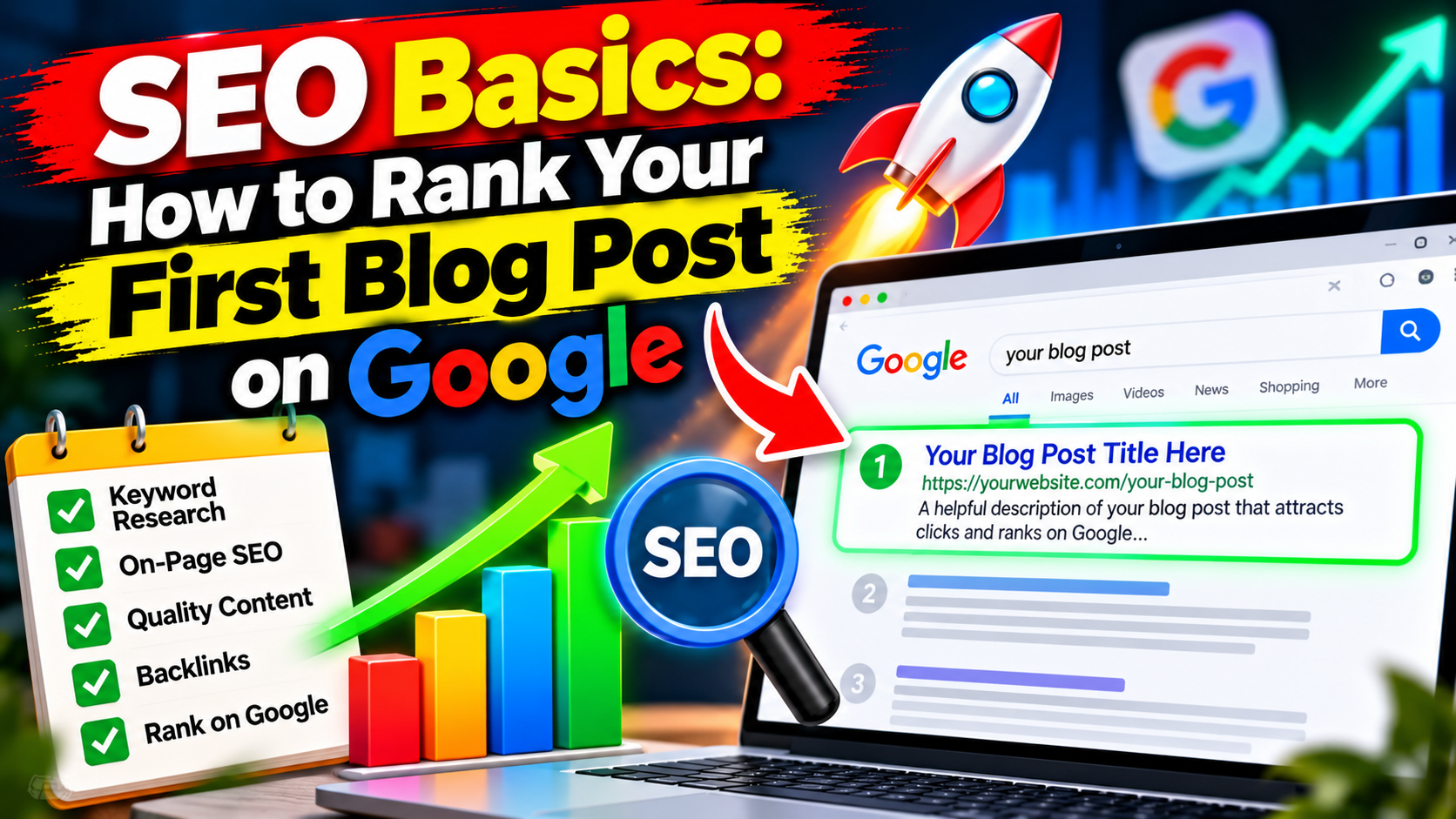
SEO has a reputation for being complicated, but the basics that rank a first blog post are surprisingly simple. You don’t need expensive tools or a marketing degree — you need to understand what Google wants and give it to them better than the competition. Here’s an SEO basics guide that actually works for beginners.
Step 1: Pick a Keyword You Can Actually Rank For
The number one beginner mistake is targeting keywords like “best laptops” — you’ll never outrank the giants. Instead, go specific and long-tail: “best budget laptop for students under $500” has less competition and clearer intent. Free tools like Google’s own autocomplete, “People also ask” boxes, and Ubersuggest’s free tier are enough to find these. Rule of thumb: if the top 10 results are all massive authority sites, pick a more specific keyword.
Step 2: Match Search Intent
Google your keyword and look at what’s already ranking. Are they guides, product lists, or quick answers? Your post must match that format — Google has already told you what searchers want. If the top results are step-by-step tutorials, don’t publish an opinion piece. Match the intent, then do it better.
Step 3: Nail the On-Page Basics
This is the checklist that covers 80% of on-page SEO: put your keyword in the title (near the front), in the URL slug, in the first 100 words, and in at least one subheading. Write a compelling meta description (under 160 characters) that makes people want to click. Use proper heading structure (one H1, then H2s). Add descriptive alt text to images. That’s it — the fundamentals haven’t changed in years.
Step 4: Write the Best Answer, Not the Longest Post
“Write 2,000 words” is outdated advice. What ranks is the most satisfying answer to the searcher’s question. Cover the topic completely, cut the fluff, use headings and short paragraphs, and answer the core question early — don’t bury it under 800 words of intro. Google measures whether searchers bounce back to the results; a post that satisfies them wins.
Step 5: Get Your First Backlinks
Backlinks (other sites linking to you) are still Google’s strongest trust signal. For a first post, realistic tactics beat grand strategies: share it in relevant communities (Reddit, Quora, niche forums) where it genuinely helps, mention it in guest posts, and create something worth citing (original data, a useful checklist, a free template). One real backlink beats fifty spammy ones.
Step 6: Be Patient and Measure
New posts typically take 3–6 months to reach their full ranking potential — Google tests new content cautiously. Install Google Search Console (free) on day one and watch impressions climb before clicks follow. Don’t rewrite the post every week; give it time, then improve based on what the data shows.
What NOT to Do
Don’t stuff keywords unnaturally, don’t buy backlinks, don’t copy competitors’ content, and don’t obsess over meta keywords (Google ignores them). These shortcuts either don’t work or actively hurt you. SEO rewards the boring fundamentals done consistently. Master these SEO basics and your first ranking post is a matter of when, not if. For more website growth guides, explore our tutorials section.