USB-C Won the Charger War: What It Means for Your Next Phone
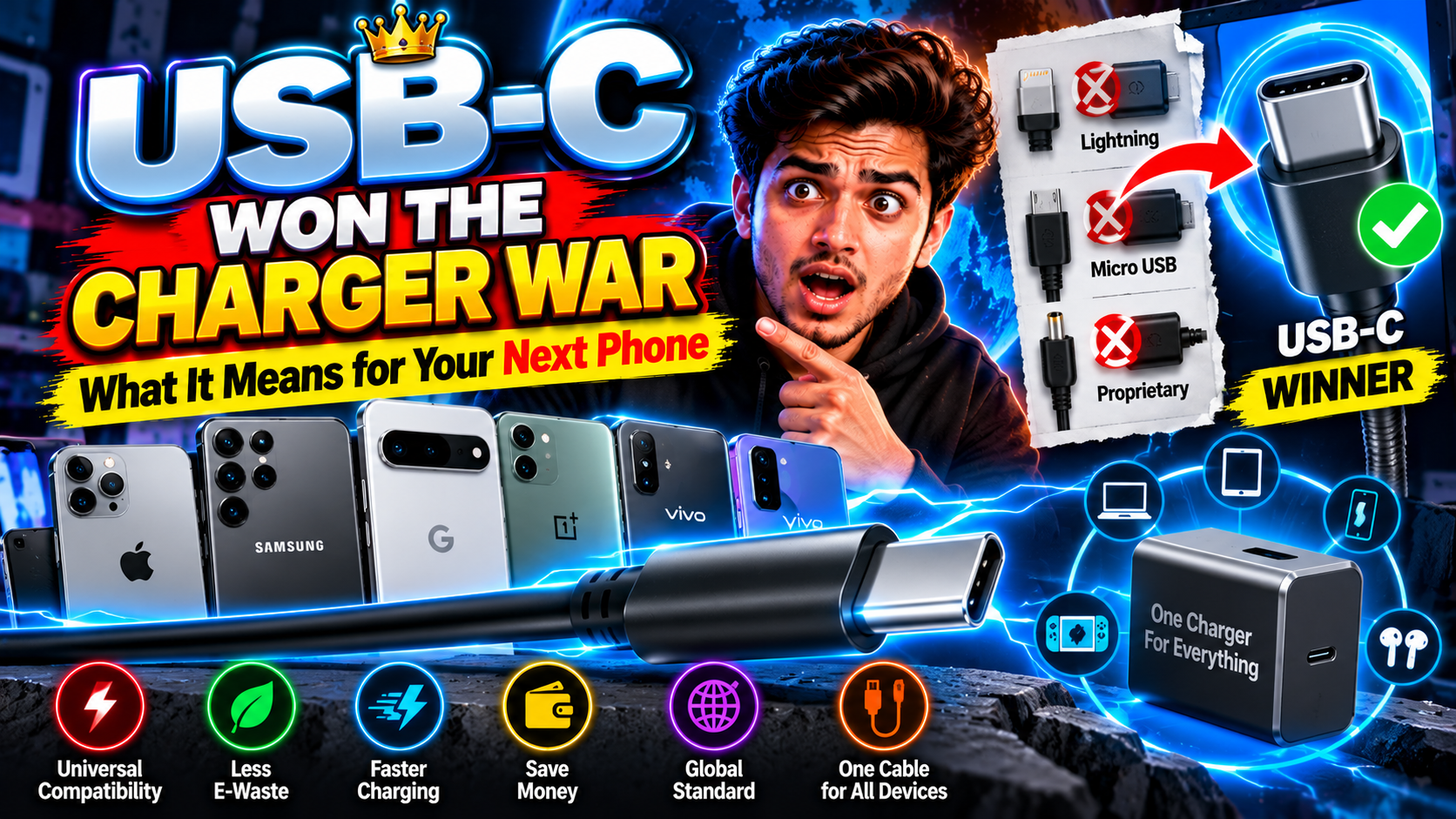
Remember the drawer? Every house has one — a tangled graveyard of chargers, each fitting exactly one device and nothing else. Micro-USB for the old phone, Lightning for the iPhone, some weird barrel plug for the laptop, and a cable you can’t even identify anymore. Well, that era is officially over. USB-C won the charger war, and it wasn’t even close.
The European Union’s common charger law forced every phone, tablet, and camera sold in the EU to use USB-C — and the ripple effect went global. Apple, the last big holdout, switched the iPhone to USB-C. Samsung was already there. Even Nintendo’s newer hardware uses it. For the first time in the history of consumer electronics, one plug fits practically everything.
What Actually Changes for You
The biggest win is boring, and that’s exactly the point. Your next phone, your earbuds, your power bank, and quite possibly your laptop will all charge from the same cable. Traveling gets simpler — one charger, one cable, done. A single 65W USB-C GaN charger can now handle a phone, a laptop, and a watch together. Two years ago that would’ve meant three separate bricks fighting for outlet space.
There’s a money angle too. The EU estimated the law would save consumers around €250 million a year on unnecessary charger purchases. Phone makers can now sell devices without a charger in the box — Apple and Samsung already do — which stings the first time, but it’s genuinely fine once you own two or three USB-C bricks. The drawer of dead cables finally stops growing.
The Part Nobody Tells You: Not All USB-C Cables Are Equal
Here’s where it gets tricky. USB-C describes the shape of the plug — what the cable can actually do varies wildly. A cheap gas-station USB-C cable might charge your phone at a crawl and carry zero data. A proper USB4 cable can push 40Gbps and 240W of power. They look identical sitting next to each other, which is the whole problem.
Simple rule: buy cables from brands that print their specs on the packaging. If it doesn’t say the wattage and data speed, assume the worst. For charging phones, any decent 60W cable is fine. For laptops, get a 100W-rated one. And if a cable costs less than your coffee? It’s not a bargain — it’s a slow charger with extra steps.
What About Your Old Cables?
Don’t throw them out just yet. Lightning cables still work fine with older iPhones and AirPods, and plenty of accessories still run on Micro-USB. But when you buy something new, check the port first — if it’s not USB-C in 2026, that product is living in the past and you should probably skip it. No exceptions worth making.
One more thing worth knowing: the EU law also pushes toward standardized fast charging, so the days of “this charger fast-charges my Samsung but trickle-charges my Pixel” are numbered. The standard is called USB Power Delivery, and it’s the reason one brick can now serve every brand. For more on where mobile tech is heading, check our tech news section — and if you’re shopping for accessories, our gadget guides will keep you from buying junk.
Will USB-C Last, or Is Something Better Coming?
The obvious question: are we just going to repeat this whole saga in ten years with some new plug? Honestly? Probably not — and that’s the clever part of how USB-C was designed. The connector shape is decoupled from its capabilities: the same port charging your earbuds today can carry 240W and 40Gbps data with better cables tomorrow. The standard evolves without changing the plug. Wireless charging keeps improving too, but wired USB-C isn’t going anywhere — it’s too useful, too cheap, and now too legally entrenched to displace. Buy your cables with confidence. This standard has at least a decade left in it.
Related Reading
Keep exploring: our tech news section for the latest stories, and the gadget guides before your next accessory purchase.