Smartwatch Buying Guide 2026: 6 Things That Actually Matter
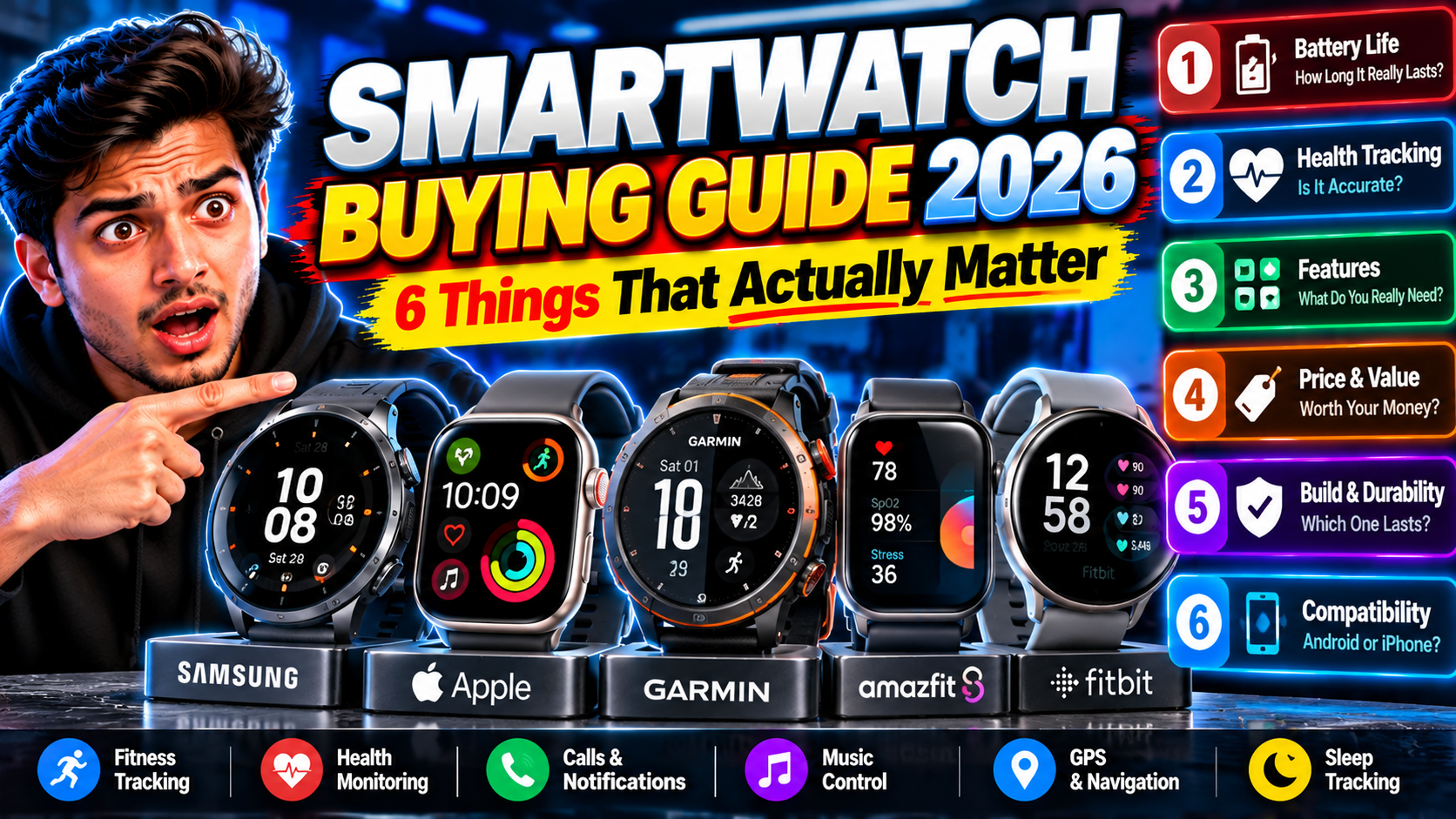
Smartwatch shopping is a minefield of meaningless specs. “Military-grade durability!” “AI-powered wellness!” Cool. But will it work with your phone, last through your day, and track your runs without lying to you? Cut through the marketing and six things actually matter. The rest is noise you can safely ignore.
1. Phone Compatibility (The Dealbreaker)
This decides everything before you look at anything else. Apple Watch only works with iPhones — full stop, no exceptions. Samsung’s Galaxy Watch works best with Samsung phones, adequately with other Androids, and not at all with iPhones. Buy the watch that matches your phone’s ecosystem. Fighting this causes endless small frustrations that no feature list makes up for.
2. Battery Life: Be Honest About Your Charging Habit
Here’s the real question nobody asks in the store: will you actually charge it every night? If yes — genuinely yes, not aspirationally — an Apple Watch or Galaxy Watch with 1–2 day battery is fine. If you’ll forget (most people do), get something with a week-plus battery: Amazfit, Huawei, Garmin, or a Fitbit. A dead smartwatch is just an expensive bracelet, and daily charging gets old fast. Plenty of $400 watches end up abandoned in drawers by week three for exactly this reason.
3. Health Sensors You’ll Actually Use
Every watch now lists a dozen sensors. The ones worth caring about: heart rate (table stakes — they all have it), SpO2 for blood oxygen, sleep tracking quality, and ECG if your doctor cares about your heart data. Skin temperature and “stress scores” are nice extras, not decision-makers. And more important than the sensor list: accuracy. A watch with three accurate sensors beats one with ten sloppy ones every time.
4. GPS: Built-in or Phone-Dependent?
Runners, this one’s for you. Cheap watches track your run using your phone’s GPS — leave the phone at home and your route map is fiction. If you exercise without your phone, built-in GPS is non-negotiable. Check the spec sheet for the words “built-in GPS” specifically. “Connected GPS” just means it borrows your phone’s, which defeats the purpose.
5. App Ecosystem and Smart Features
Can it do what you need without your phone nearby? Calls, texts, payments, music storage — the answers vary wildly. Apple Watch and Galaxy Watch are basically mini-phones on your wrist. Budget watches are notification mirrors with fitness tracking. Neither is wrong. Just know which one you’re buying — and if you mainly want notifications plus health tracking, don’t pay flagship prices for flagship smarts you’ll never use.
6. The Band and the Screen (Try Before You Buy)
The least technical point, and the most practical: you’ll wear this thing sixteen hours a day. An uncomfortable band or a dim screen you can’t read in sunlight will ruin an otherwise great watch. Buying online? Check the return policy first, then wear it for three days of normal life before deciding. Specs don’t tell you how it feels at hour ten.
What I’d Buy
iPhone user who charges nightly: Apple Watch SE — the sweet spot, most of the experience at a sane price. Samsung phone: Galaxy Watch, no contest. Other Android brand and hate charging: Amazfit or similar long-battery watch. Serious athlete: Garmin, which remains the gold standard for training data. Fitness-casual on a budget: Fitbit or Xiaomi. Match the watch to your phone, your charging discipline, and your actual workouts — not the spec sheet. More gadget wisdom in our gadget guides and tech news.
Final thought: don’t overthink this purchase. A smartwatch is the rare gadget where even the “wrong” choice still tracks your steps and shows your texts — the differences are refinements, not revolutions. Set a budget, match your phone’s ecosystem, pick the battery life you can live with, and buy from somewhere with easy returns. The best smartwatch is the one that’s charged, on your wrist, and actually being worn. Everything else is details. Oh — and get the sport band version if you sweat. Leather and metal look classy in product photos and disgusting after one summer. You’ve been warned.