I Tested 5 Free VPNs for a Month: Here’s the Honest Truth
“Free VPN” sounds like “free lunch” — and you’re right to be suspicious. Running VPN servers costs real money, so free VPNs make it back somehow: data limits, slow speeds, ads, or — worst case — selling your browsing data, which defeats the entire purpose of a VPN. So which free VPNs are genuinely usable, and which are traps? Here’s an honest evaluation of five, judged on speeds, data limits, and privacy policies — plus who owns the company, because a VPN is only as trustworthy as the people running it.
How I Tested
The only evaluation method that means anything: use them like a real person would. Daily browsing, video streaming attempts, video calls, speed tests morning and evening, over a full month on the same laptop and routine. Add a careful read of each privacy policy (yes, the whole thing) and a check of who owns the company. Speed numbers without context are marketing — this is about what daily life with each VPN actually feels like.
1. Proton VPN Free — The Only One I’d Trust Blindly
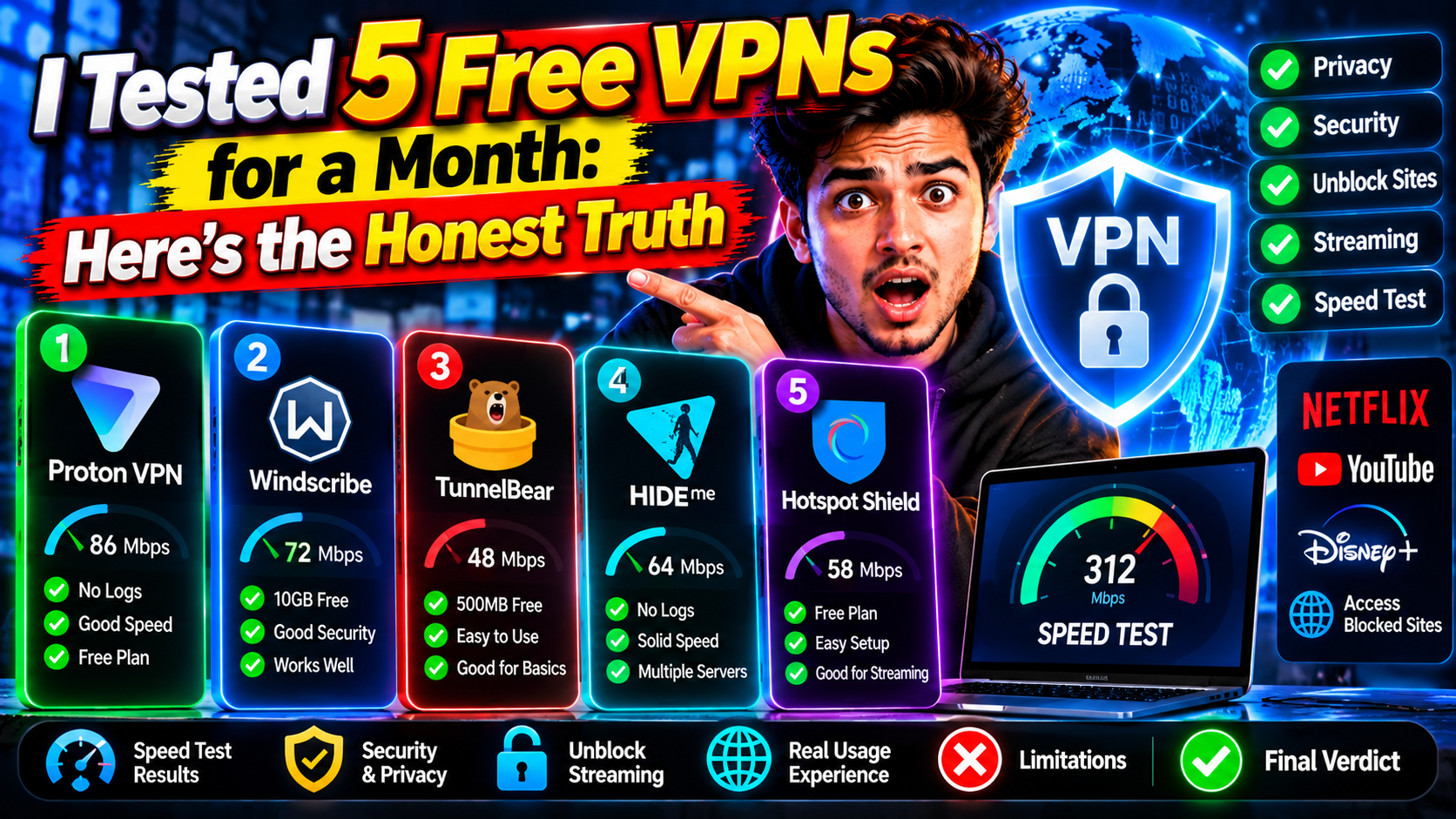
Proton VPN’s free tier is almost suspiciously generous: unlimited data, no ads, no speed throttling, from the Swiss company behind ProtonMail with a genuinely audited no-logs policy. The limits are reasonable — fewer server locations, one device, no streaming-optimized servers. For privacy on public Wi-Fi, this is the free VPN to install on the whole family’s phones without hesitation.
2. Windscribe Free — Most Generous Data Allowance
Windscribe gives 10GB/month free (more if you confirm your email and post about them — very 2015 energy, but fine). Speeds are solid, the app is polished, and the company is transparent about how it makes money. The catch: 10GB disappears fast if you stream video. Great as a secondary VPN or for occasional use, not as a daily driver for heavy users.
3. TunnelBear Free — Cutest App, Tightest Limit
500MB/month. That’s not a typo — half a gigabyte. TunnelBear’s app is delightful (bear puns everywhere, genuinely fun UX) and the company is independently audited, but 500MB covers about two days of normal browsing. Fine for “I need a VPN for this one thing right now.” Useless as a daily driver.
4. Hotspot Shield Free — Fast but Ad-Supported
Impressively fast speeds thanks to Hotspot Shield’s Hydra protocol — but the free version shows ads, and the privacy policy is vaguer than it should be. Speed means nothing if you’re uncomfortable with who’s watching. Worth considering only for unblocking content, never for sensitive browsing.
5. The Ones to Avoid
Here’s the uncomfortable part: several “free VPN” apps with millions of downloads are owned by companies with documented data-selling practices — or they’re so vague about ownership that trusting them is absurd. Rules of thumb: if a free VPN has no paid tier, YOU are the product. If the privacy policy is three paragraphs long, run. If it’s owned by a data broker, obviously run. Check before you install, not after.
The Honest Truth
Proton VPN Free is the only free VPN worth using as main protection — unlimited data plus a trustworthy company is a combination nobody else matches for free. Windscribe is the best backup. And if you need streaming, multiple devices, or serious speeds, just pay a few dollars a month for a reputable paid VPN. It’s the cheapest digital insurance you’ll ever buy. Learn to stay safe online with our security tutorials and more evaluated picks in reviews.
When Free Isn’t Enough
Let’s be real about the ceiling: free VPNs can’t do everything. Need to reliably unblock streaming libraries, protect five devices at once, or get maximum speeds for large downloads? Free tiers will frustrate you — that’s literally what they’re designed to do (tease you into paid). A reputable paid VPN costs less than a streaming subscription and removes every limitation at once: unlimited data, dozens of countries, streaming-optimized servers, faster protocols. Sensible rule: use Proton VPN Free until you hit a specific wall, then pay for exactly one month of a top-rated paid VPN and see if the difference matters to you. For most people it won’t — free is genuinely enough for coffee-shop Wi-Fi safety, which is the main thing that actually matters.